
Artist Branding for Musicians: Make Every Release Build Your Name
A song can take off while the artist behind it stays hard to place.
The Problem After a Good Release
The song gets saved. A clip gets shared. A few strangers show up at a gig. Then you release again, and much of that attention seems to start from zero.
They heard the song. They may not know your name or what to play next.
What Artist Branding Has to Do
Artist branding is the set of choices that helps a listener know it is you across songs, covers, clips, shows, and releases. It gives them a fair idea of what they will get, while leaving you room to grow.
You already have music and some proof of demand. Use that proof to decide what stays familiar and what can change. Your team needs a brand it can use to make real calls, not a deck full of nice words.
What You’ll Learn
- How to tell a brand gap from a song or traffic problem
- How to find your strongest position in music and fan response
- Which parts of the act should stay steady across release eras
- How to brief a designer, editor, or manager without killing their ideas
- How to test what new fans expect and remember before you spend more
Find the Brand Gap Before You Redesign Anything
When a song grows faster than the act, a new look can feel like the answer. Start by checking where people lose the thread. What did the first song lead people to expect, and does the rest of the act back that up?
| What you see | A brand gap to check | What else it could be |
|---|---|---|
| One song travels, but few listeners try the next | The artist page and other songs seem to promise a different act | The next song is buried or does not fit the listener who found the first |
| Your live set wins people over, but your pages feel flat | The photos and clips miss what happens in the room | New visitors never reach a strong live clip |
| A social post gets views, but people recall the joke, not you | The format hides your face, voice, name, or point of view | The post reached people who were never likely to want the music |
| Each team member pitches a different kind of artist | No one has agreed on what the songs and fans support | The current release may need a sharper story of its own |
Each row gives you something to check. On its own, a weak follow rate cannot prove that your colors are wrong. Look at the song, the page people land on, and what those people do next. Our music analytics guide goes deeper on the numbers, and the Spotify artist profile guide covers the page itself.
Build an Evidence File From Music and Fans
Pick three to five tracks that show where the act is going. Include the song that brings in the most strangers, even if it is an outlier. Then add two strong live clips or videos. You want to see both the door people enter through and the act waiting behind it.
Make a small evidence file from four sources:
| Source | Keep the exact detail | What it may tell you |
|---|---|---|
| Songs | A vocal turn, drum feel, kind of line, or shift in energy that repeats | What the music can prove without a caption |
| Fan words | Ten to twenty comments, DMs, or things said after a show | What listeners noticed on their own |
| Listener behavior | Which songs bring people in and which make them stay | Whether the popular track speaks for the catalog |
| Team output | Recent covers, photos, clips, press lines, and show art | What the team is teaching people to expect |
Save fan words as written. “That last line felt like my drive home” is more useful than changing it to “relatable storytelling.” Set aside praise from other artists about your gear or mix unless those people also act like fans.
Spotify for Artists explains how to read song and audience data. Compare reach and saves by song. Then check artist-level follows and repeat listening over the same period.
Now mark the details that show up in at least two places. A close vocal may run through four tracks. Fans may talk about how the last chorus opens up. The live clip may show the same turn from quiet to loud. That is stronger ground than a look you picked because it is in style.
Choose a Position Fans Can Place and You Can Keep
Use those repeats to draft three possible lines for the act. Do not polish them yet. For each, name:
- The lane: What nearby sound, scene, or listener moment helps someone place you fast?
- The signature: What can they hear or see that belongs to you across more than one song?
- The return: What do they come back to you for after the first track?
A lane is useful. “Indie rock” may help someone find the door. It is not enough to explain why they should walk through yours. “Genre bending” rarely even tells them where the door is.
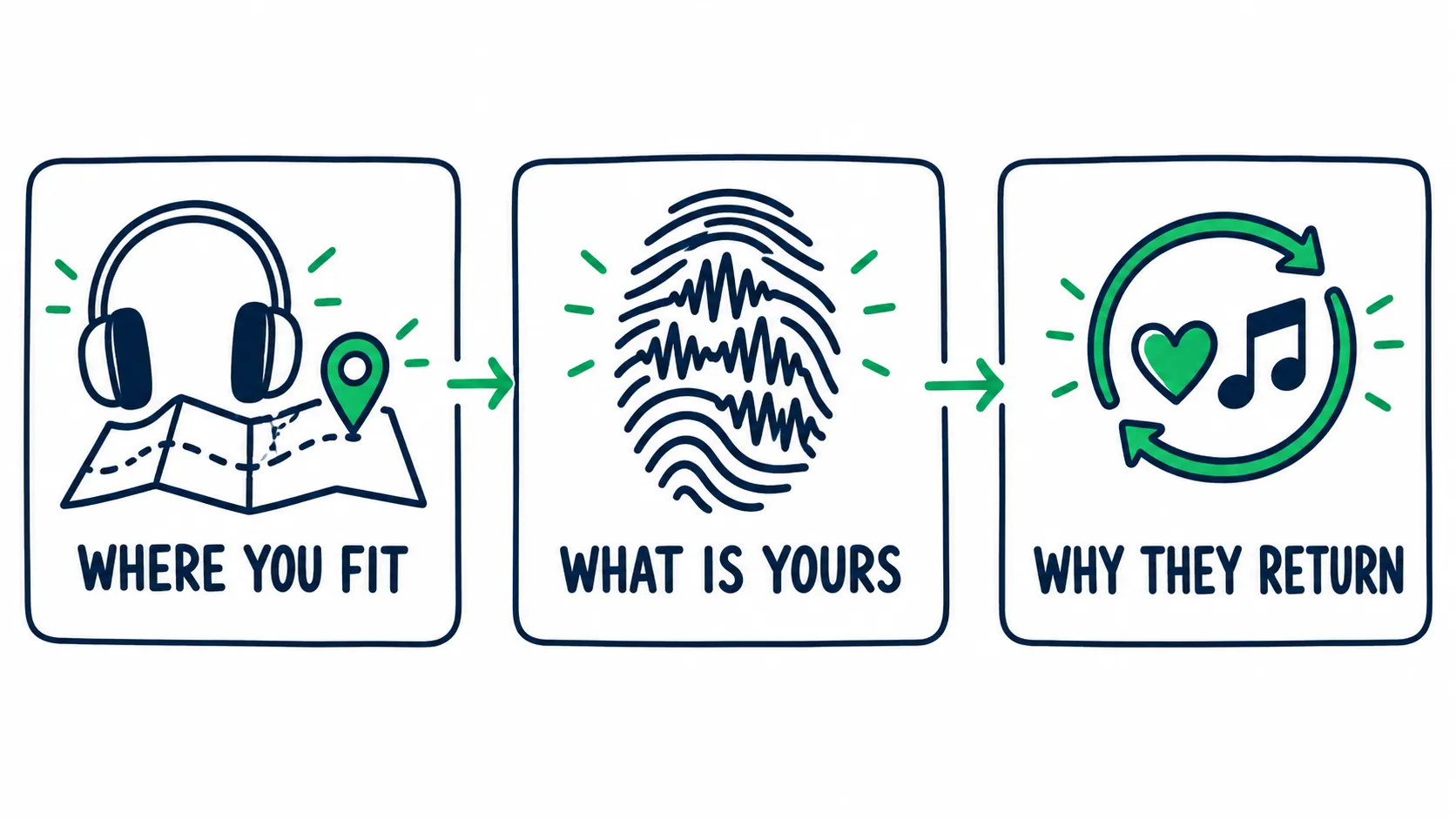
A useful position gives listeners a way in, something to recognize, and a reason to play another song.
Put each draft through four checks:
- Music proof: Can you point to at least two songs or a song and a live set that back it up?
- Fan proof: Have listeners noticed some part of it without being told?
- Choice: Would it help you pick between two covers or two opening clips?
- Room to move: Could your next release still belong to this act?
Drop a line that fails most of these checks, even if it sounds sharp. You can keep the winning line inside the team. It does not need to become a public slogan.
That line is the base for your artist bio. The bio has a different job. It chooses the facts and proof a fan, writer, or booker needs. Build the brand choice first, then write the version each reader needs.
Keep the Artist Core Separate From the Release Era
An artist picks one color, outfit, or mood, then feels trapped when the songs change.
Split the brief into two layers.
| Artist core: keep it easy to spot | Release era: let it change |
|---|---|
| Voice, writing habits, humor, values, or a live move that runs through the work | The story and sound of this set of songs |
| One or two visual habits people can still link to you | Colors, places, clothes, props, and cover treatment |
| The kind of feeling or scene fans come back for | Which side of that feeling this release brings forward |
| The artist name and a clear path to the catalog | The line, image, or clip leading this campaign |
The core can be a contrast. Maybe the verses sound close and the chorus feels like the whole room has joined in. That can live in a stripped song, a louder record, and a live set. A shade of green cannot do the same job.
Write down what is fixed for this act and what is open for the next era. If you cannot tell the two apart, every new cover becomes a debate about the whole career.
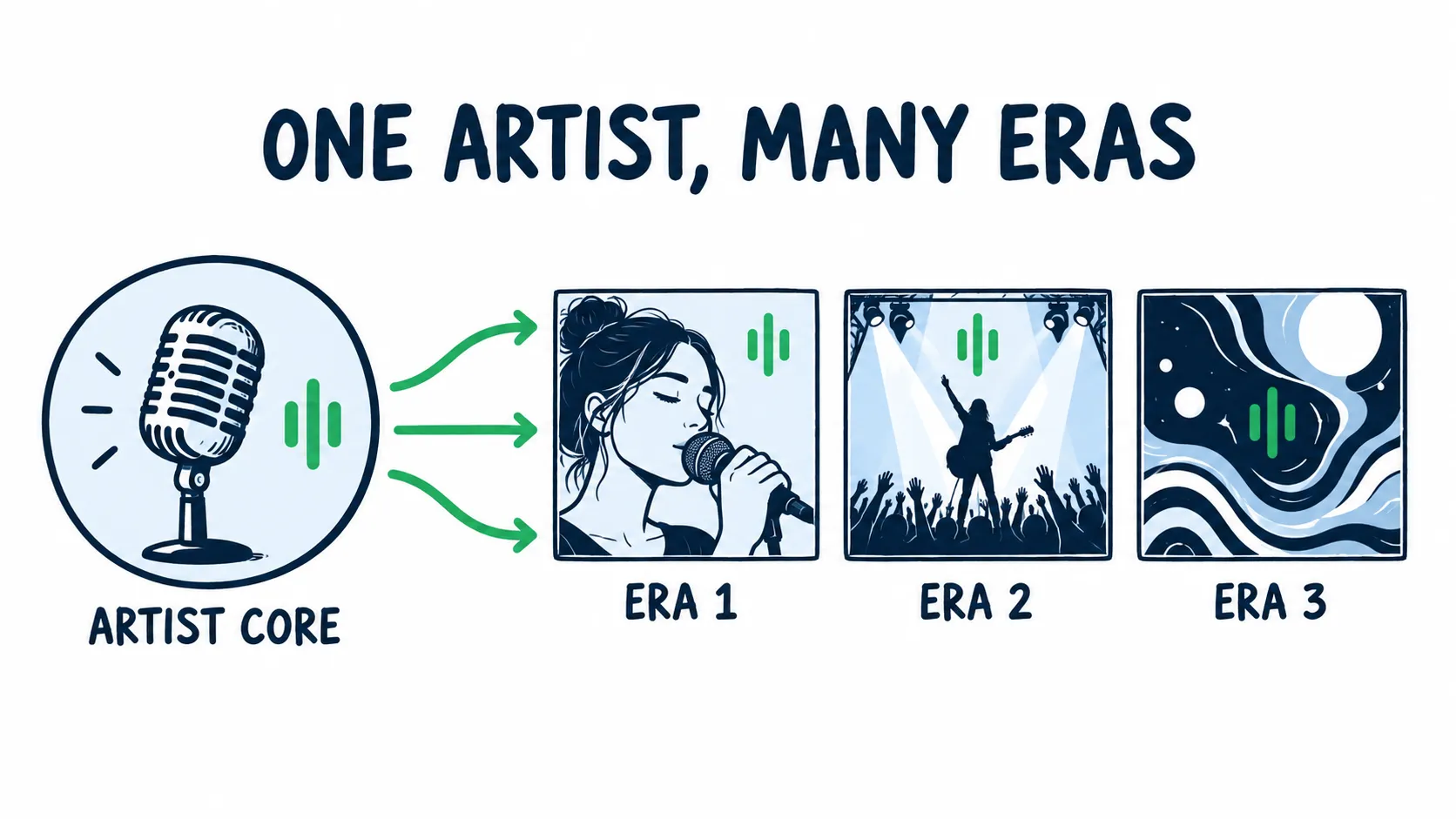
The shared waveform stands for the voice and point of view fans know. Each release can change its scene.
Give Your Team a Brief That Settles Real Choices
Give your photographer, editor, manager, or designer one page they can use without asking you to approve every small move.
Put these answers on the page:
- The claim: One plain line about what fans come to this act for.
- The proof: Three source tracks, a live clip, and two fan phrases that back the line.
- The signature: Two or three sounds, story moves, or visual habits that can return.
- The range: What must stay familiar, and what can change for this release.
- The line we will not cross: One or two looks or claims that would sell the wrong act.
- The next job: The exact asset, where it will appear, and what a new fan should get from it.
- The pass check: What should a stranger expect or recall after seeing that asset?
Do not send “make it cinematic” to a designer and hope they hear the same film you do. Send the songs. Show one photo whose light works and one whose pose does not. If you share another artist’s work, mark the part you mean: “use the close crop, not their clothes.”
Set rules for each asset before the team makes it. A profile photo must still read in a small circle. A show poster needs the name and date at a glance. A cover may have room for more story. The same shoot can feed all three if you plan the crops.
Spotify shows where its artist images appear, and its image rules rule out text and busy backgrounds in some profile images. Apple Music has its own artist image guide. Check those pages before you approve the final files.
A logo may help when it has a real job on stage, merch, or print. It does not have to lead the project. For many acts, one strong photo and a name people can read will do more work first.
Worked Example: The Hit Sounds Softer Than the Next Record
Picture a band whose quiet song found listeners on sad indie playlists. The singer’s close voice and blunt lines brought people in. At shows, the band plays loud. The crowd waits for the heavy last chorus. The next record leans into that sound.
This is a made-up case. The hard choice is whether the band should look like the soft playlist song, the live set, or the new record.
Fans mention the voice and the final chorus more than the acoustic guitar. The louder live clips get people asking about shows. The quiet song is a good doorway, but “gentle acoustic band” would promise the wrong next record.
They test three lines:
- “Sad acoustic band.” Easy to place, but too small for the live set and new songs.
- “A band with no genre.” Wide enough for anything, but gives a new listener nothing to hold.
- “Close, plain words that grow into a loud room.” You can hear it in the hit, the live set, and the songs ahead.
The team picks the third line because it helps them choose photos for the new record without treating the quiet hit as a different act.
Their one-page brief can now say:
- Core: the singer’s close voice, plain lines, and a song that builds.
- Current era: the band enters harder; live energy comes forward.
- Keep: the singer close to camera, the full band in view, a clear band name.
- Change: the warm room photos can give way to flash-lit stage images.
- Avoid: a lone acoustic portrait that makes the new songs feel like a surprise act.
Now the photographer, editor, and designer can make these calls:
| Asset | The call | What it solves |
|---|---|---|
| Artist photo | Use a close shot of the singer with the band behind, taken before a show | The voice from the hit and the band from the next record belong in one frame |
| Cover | Keep the close human focus; bring in flash, motion, and the full band | The new era feels louder without looking like a new artist name |
| Lead clip | Start on a quiet line, then show the room singing the last chorus | A new listener hears the link between the playlist song and the live act |
| Show poster | Use the same crop style, a bold readable name, and clear venue details | A fan can spot the band and act on the show date |
Rather than hiding the acoustic hit or announcing a full rebrand, they need a bridge. The first song they push from the new record should let listeners hear both sides of the act. Our lead single guide covers the release choice itself.
Fix the Places Fans Actually Reach
A playlist listener and a concertgoer do not meet the same page first.
| Where discovery starts | Brand check to do first | Leave this for later |
|---|---|---|
| Playlist or radio play | Artist image, first profile screen, and a clear next track | A full merch redesign |
| Short video | Can a viewer link the face, voice, or name in the clip to the artist page? | A new font for every post |
| Live shows | Do the show photo, poster, and site look like the act on stage? | A long brand manifesto |
| Press or booking | Do the approved photo, bio, and live clip tell the same story? | More claims with no proof |
On Spotify, a fan may see your image and the top of your profile after hearing one song. Spotify’s artist profile guide shows what you can set there. Use our Spotify artist profile guide when the page itself needs work.
On YouTube, the channel photo, banner, featured video, and thumbnails may meet fans in a different order. YouTube’s artist channel guide shows those spaces. Our YouTube for musicians guide covers what to do with the channel after it looks right.
Apple Music lets artists set page color and choose featured content. Your own site gives you more room, but it still needs to help a new fan find the song or show that matters now. Use the music website checklist for that pass.
Check the work at phone size. If the name fades into a busy photo, the W3C guide to text contrast can help.
When press or booking picks up, the brand brief feeds your artist bio and EPK. The same short bio is what you send with music blog promotion, where posts are matched to blogs that cover your sound.
Test What People Expect and What They Recall
Do this before paying for a full shoot or rolling the new look across every page. You need two small groups: current fans who know the music and people who like your lane but do not know your name. Ask each person alone so nobody follows the room.
First, hide the name and sound. Show the cover, profile photo, and one video still. Ask:
- What kind of music do you expect?
- Do these look like one act?
- What would you look for if you wanted to find this artist tomorrow?
Then play the track. Ask what fit, what felt wrong, and what image they still remember. Do not explain what the team meant until they answer.
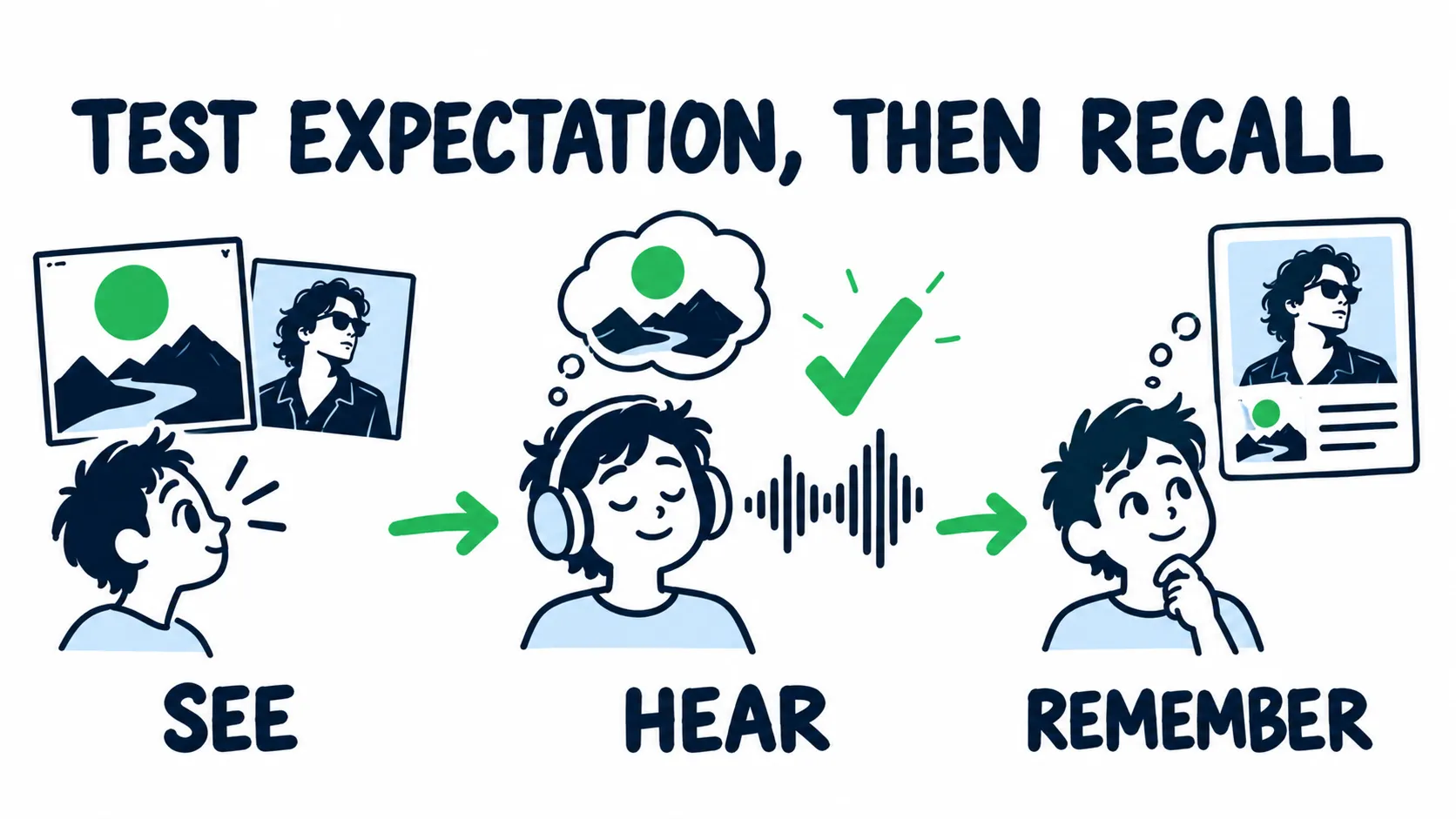
Check the expectation before the play. Then check whether the artist stays in mind.
If several people expect a club track and hear a slow folk song, the visual promise is off. If they hear the right lane but cannot link the clip to the artist page, carry one clear cue across both. If they remember the name and image but do not want another track, check the music and next song path before you buy new photos.
Keep the notes. Change one main part, then test again. If you swap the name, photo, cover, and song at once, you will not know what helped.
After launch, look for more than a view spike. Check whether the right listeners follow, save, return, and try another song. Compare similar traffic sources where you can. The music analytics guide covers that work in more detail.
Key takeaway
Refresh the Look, Change the Era, or Split the Project?
Treating each new sound like a new identity burns the work fans have already done to learn you.
| What changed | Best next move | What to keep |
|---|---|---|
| The songs and fans still fit, but the photos look old | Refresh the assets fans see first | Name, main story, and strong links to the catalog |
| The new music pushes into another sound, but your voice and point of view carry through | Build a new release era and show the bridge in music and images | The parts fans already know are yours |
| The new work serves a different crowd and asks for a different promise | Test a separate project before forcing the songs together | Rights, credits, and a clear path between projects where it helps fans |
Leave one or two familiar parts in view as colors, clothes, and places change. Our music release checklist handles the timing. The Spotify algorithm launch playbook handles the push once the release is set.
Put the Brand to Work Before You Buy Reach
A clear brand cannot make a weak song work. It makes the next audience test more useful.
Start with listeners near your sound, not a broad group chosen for cheap taps. Keep the song and artist page steady while you test separate groups. Look past the first play: saves, follows, repeat plays, and second songs tell you whether people want more. Put the next round of effort behind the groups that keep responding. If response is thin everywhere, check the song and page before widening reach.
Good Spotify promotion follows the same logic. It uses the artist profile and similar artists to reach matched listeners, then moves budget toward the groups that keep streaming, saving, and following. You can use the same rule when you run your own tests.
Set the spend after you know which song, page, and fan action it will support. The music promotion budget calculator can help with that number.
Artist Branding FAQ
Our biggest song sounds unlike the next release. Which one should shape the brand?
Use the hit as the door people know. Build the artist core from what runs through the hit, the other songs, and your live set. In the worked example above, the close voice stays while the band sound grows. Let a new song and image show that link. Do not make the whole act look acoustic just because the acoustic track reached the most people.
Can one artist name hold two genres?
Yes, if fans can hear a clear thread across the work. Voice, writing, mood, or live energy may carry more than the genre tag. Play the tracks in a row for people in your lane. If they hear two acts with different fans and no shared reason to return, test a separate project before you force the songs together.
Do we need a logo or a full style guide?
Only buy what solves a job now. Start with the photo, cover, name treatment, and short brief used on the pages fans see. A logo earns its cost when it must work on merch, stage art, or print. A full guide makes more sense once several people are making assets and the work keeps drifting.
What if our best social posts feel wrong for the music?
Look at what people are responding to. Do they like the song, your voice, your point of view, or only the joke? Keep the part that brings the right listener close and change the part that hides the act. Our content strategy guide goes deeper on testing formats and fan paths.
How do we know the brand work is helping?
Before release, ask whether people can link the song, image, and artist name, and whether the music meets what the image led them to expect. After release, look for fans who follow, try another track, return, or ask about a show. Check the traffic source and the song too. Those actions are clues that the act is getting clearer. A color palette cannot take credit for them on its own.