
Lead Single Meaning: How to Choose the Song That Starts Your Album
Your lead single is the song that makes people care enough to hear what comes next.
That sounds simple, but when you are sitting on a folder full of mixes, it gets weird fast. The best song might feel too risky. The catchy song might not show the whole album. The personal song might mean the most to you, but take too long for a new listener to get.
The lead single does not need to be perfect. It is the first song most people will hear from the project, so it sets what they expect from everything after it.
The Short Answer
Lead single meaning: the first main song used to introduce an album, EP, or new era.
A single is any song you release or promote on its own. A lead single is the one that opens the rollout for the whole project.
Why This Gets Confusing
Streaming made the word “single” messy. You can drop one song today, add it to an EP later, and put it on an album months after that. Then you can push a different album track after the project is already out.
So the old answer, “the first song before the album,” does not always fit. A better test for artists is which song you are asking people to judge the new project by first.
What You’ll Learn
- What a lead single means in simple words
- How a lead single is different from a single, promo single, and focus track
- What makes a song a single now
- How to choose your lead single without guessing
- How many singles to release before an album
- What to check after the song goes live
- Five questions artists ask about lead singles
Lead Single Meaning
A lead single is the first big song used to launch a project.
Back when radio, CDs, and vinyl drove the business, the single had a clear job: pick one song, send it to radio, make the video, and get people ready for the album.
That job still exists, but it now runs through more channels. A lead single can help with:
- First fan reaction
- Playlist pitching
- Social content
- Music ads
- Press
- Fan pre saves
- Artist profile momentum
- Early streaming signals
Spotify explains that artists can pitch unreleased music through Spotify for Artists, and that pitching at least seven days before release can help the selected song reach followers through Release Radar.
Pitching does not make a song the lead single. But you usually get one clean first push: one main pitch, one first wave of posts, and one first chance to see how people react. The lead single is the song that gets it.
Key takeaway
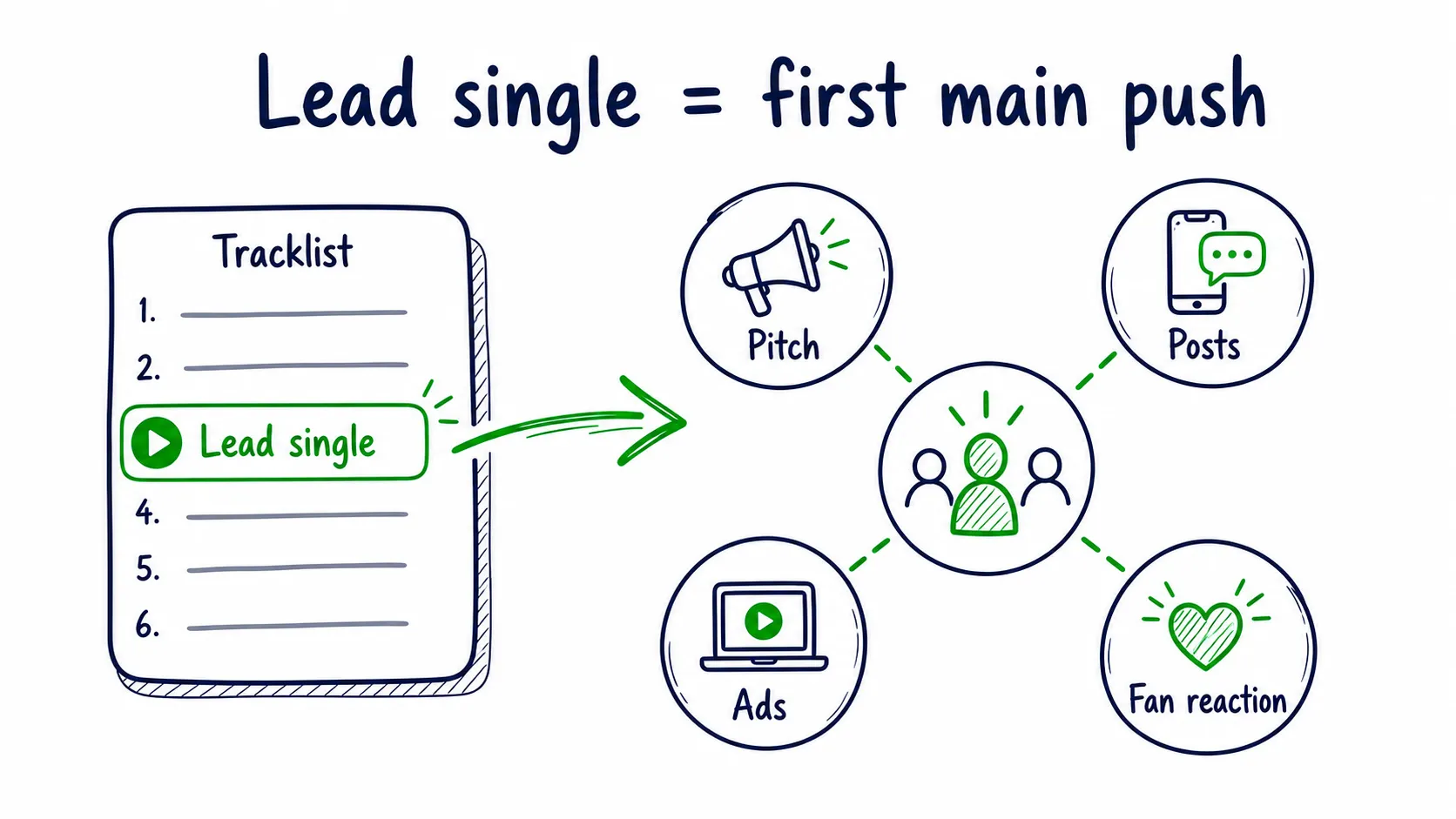
The lead single concentrates the first real push around one clear song.
Lead Single vs Single vs Promo Single
People mix up single, lead single, promotional single, and focus track, but each one describes a different job.
| Term | What it means | Main job | Example use |
|---|---|---|---|
| Single | A song you release or promote by itself. | Get attention for that song. | You drop one song on Spotify. |
| Lead single | The first main song that opens the project. | Introduce the album, EP, or new era. | You start the album rollout with one clear track. |
| Promo single | A promotional song shared to build interest, usually with a smaller push. | Give fans more context. | You share a deeper album cut before release week. |
| Focus track | The song your team pushes hardest right now. | Focus your effort. | You promote track three after the album is out. |
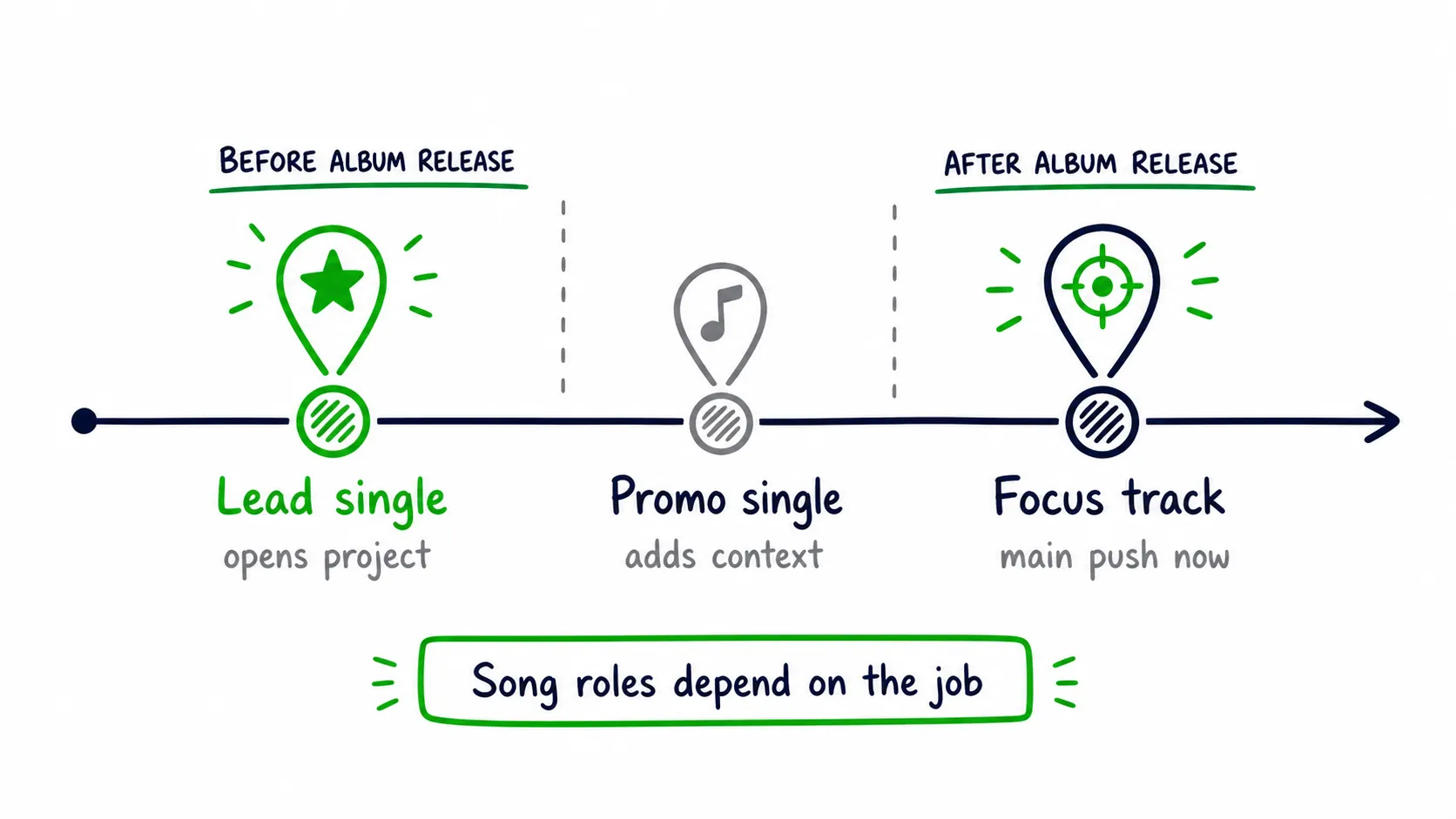
The label depends on the job the song is doing in the rollout.
These labels can overlap. A lead single is usually a single. A focus track can be a lead single. A promo single can become a bigger single if people react strongly.
That is why fan debates about lead singles go in circles. Fans argue about which song came out first. For artists, the useful question is whether this is the song getting the serious push.
The lead single is the first song you are willing to build the campaign around.
What Makes a Song a Single?
A song becomes a single when you give it its own push. It may come out before an album, after an album, or never join one.
If the song gets its own release date, artwork, video, playlist pitch, radio plan, ad plan, or content plan, you are treating it like a single.
Charts still track songs as singles in practical ways. Billboard publishes song charts such as the Hot 100. The RIAA explains certifications for Gold and Platinum awards. The Official Charts Company explains how songs enter the official charts.
If you are an independent artist and you are asking people to pay attention to a song by itself, it is a single, and it deserves a plan, even a small one.
What a Lead Single Needs to Do
A lead single needs to:
- Help people understand you fast.
- Make the project feel real.
- Give fans something easy to share.
- Match the audience you want.
- Leave room for the next song to build.
None of those jobs call for the weirdest song, the deepest lyric, or the one your producer keeps talking about.
How To Choose A Lead Single
Before you choose, score each song from one to five on the six tests below.
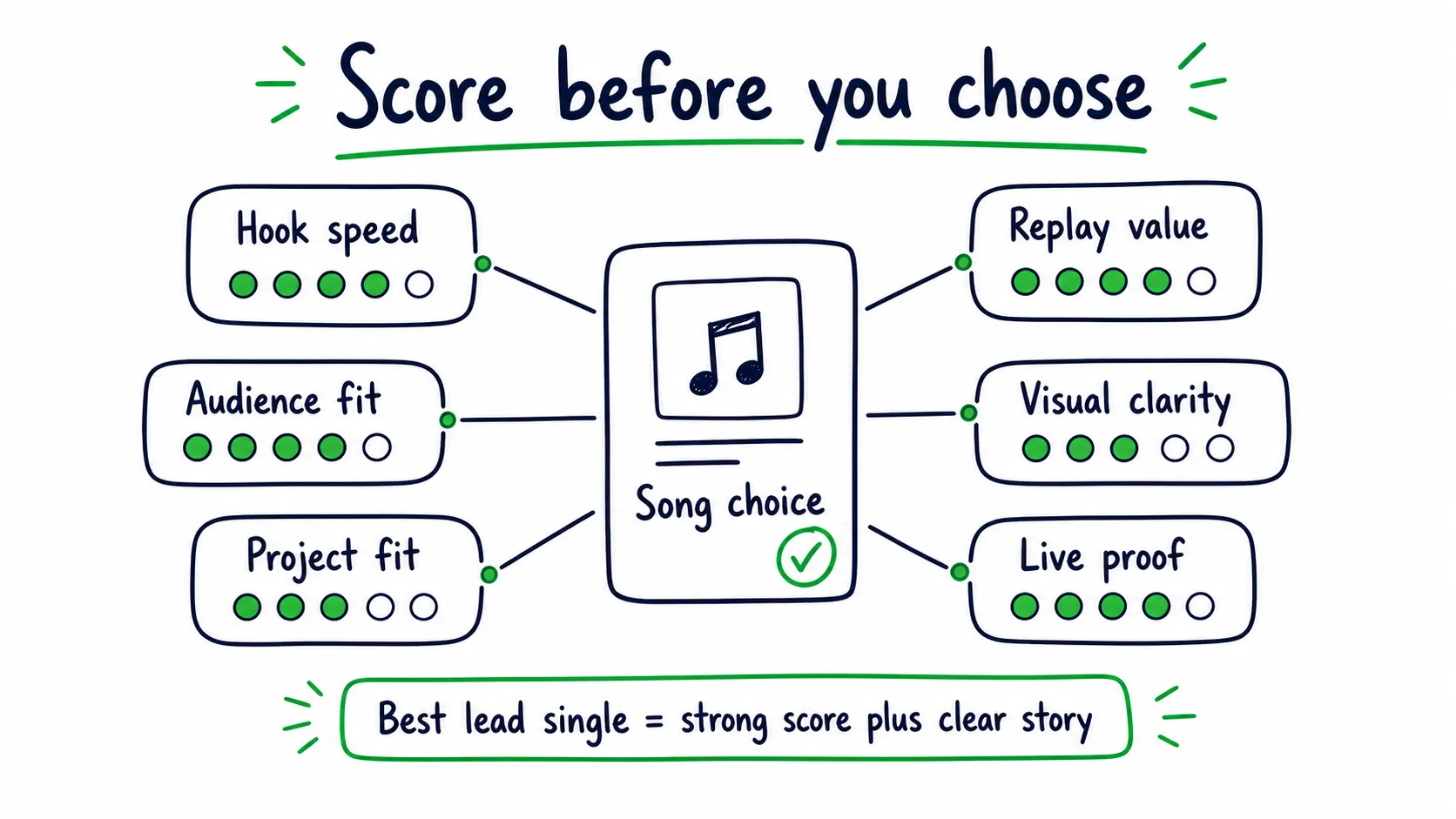
Score the choice before your taste, ego, or studio bias takes over.
| Test | Question | Why it matters |
|---|---|---|
| Hook speed | Does the song land before the first chorus? | New listeners do not wait long. |
| Audience fit | Can you name the listener? | Vague music is hard to promote. |
| Project fit | Does it tell the truth about the album? | The wrong first song can confuse people. |
| Replay value | Would a casual listener run it back? | Repeat listens tell you more than clicks. |
| Visual clarity | Can you make good short videos for it? | The song needs to live outside Spotify too. |
| Live proof | Does it get a real reaction? | Polite friends are not enough. |
Add up the scores. The highest total is not automatically your lead single, but it puts the fight in your head on paper.
Maybe one song says the most, but takes too long to start. Maybe another song is less deep, but the hook lands fast and the video ideas are obvious. That second song might be the better lead single, even if it is not your favorite. This is where ego can waste a release.
Your scorecard is still a guess made by people who already know the songs. The track your team picks is not always the best first song for a new listener. So let two or three songs that fit compete for the same strangers, and let saves and follows pick the winner. Streams alone will not settle it, because a song can get played once and forgotten.
You can run a small version yourself. Take the top two or three songs from your scorecard that are already on Spotify (earlier singles count). Build one small ad audience around two or three similar artists, rotate the candidates to that same group, and after seven days compare saves and follows per song in Spotify for Artists. If your candidates are still unreleased, run short clips of each to the same audience and compare shares and profile visits instead.
At scale, the same test runs across many audience pockets, with daily budget shifts and constant track rotation. That is how the audience intelligence loop finds the song that turns strangers into fans.
The Biggest Lead Single Mistakes
Better Choices
- Pick the song that makes your sound clear.
- Choose a track you can talk about for weeks.
- Match the single to the audience you actually want.
- Use the first single to learn before the next song.
Risky Choices
- Pick the weirdest song just to prove range.
- Choose the fan favorite if only a few people heard it.
- Lead with a song that sounds nothing like the album.
- Drop three songs at once because you are tired of waiting.
The biggest mistake is choosing the song that feels best inside the studio. That is not always the song that travels.
Another mistake is picking the catchiest song even when it lies about the project. Fans complain about this all the time. A lead single can get people excited about the wrong album.
If your album is quiet and moody, but the lead single is the only big party track, people may expect the wrong thing.
If your album is loud and direct, but the lead single is the only slow song, people may miss the real energy.
The best lead single sits in the middle: easy to get and still true to the project.
How Many Singles Before An Album?
For most independent artists, two to four singles before an album is plenty. One single can work if the audience is already warm or the project is short. Too many singles can drain the album before it even shows up.
Use this table as a starting point.
| Project | Practical single plan | Why it works |
|---|---|---|
| Standalone song | One full single push | The song is the campaign. |
| EP | One or two singles | You build interest without giving away the whole thing. |
| Album | Two to four singles | You give fans more than one reason to care. |
| Debut artist | Start with one clear single | You need real data before you guess again. |
If you are new, keep it simple. Release one strong song, promote it well, and study what happened. Then make the next choice with better information.
Our music promotion cost guide can help you decide how much budget to put behind each song. When you pay to promote a single, judge the campaign by whether it tests more than one track, moves budget toward the listeners who save and follow, and shows every result in your own Spotify for Artists.
How To Set Up Your Lead Single On Spotify
Once you pick the song, do these before release day:
- Deliver the song early through your distributor.
- Check the artist name, credits, artwork, and release date.
- Claim or update your Spotify for Artists profile.
- Pitch the song while it is still unreleased.
- Make short videos around the strongest part of the song.
- Build a simple landing page or smart link.
- Plan your first week of posts before the song goes live.
Spotify has different playlist types. Its official guide to Spotify playlists is worth reading before you chase placements.
If your goal is editorial pitching, read our Spotify editorial playlists guide next.
If your goal is algorithmic reach, read the Spotify Release Radar guide and our Spotify algorithmic playlists guide.
If you want the full launch checklist, use the Spotify algorithm launch playbook.
What To Measure After The Lead Single Drops
Do not judge the song by streams only. Also look at:
- Save rate
- Playlist adds
- Repeat listens
- Follower growth
- Listener source
- Skip behavior
- Profile visits
- Countries and cities
- The posts that drove clicks
Apple also gives artists ways to understand performance through Apple Music for Artists, so do not only watch one platform if your audience uses several.
For Spotify, run our free Spotify growth audit after the single has enough data. It shows whether your profile is building real momentum or just getting short term plays.
If the song gets saves, repeat listens, and playlist adds, keep going.
If it gets clicks but no streams, check the landing page and deep links.
If it gets streams but no saves, the audience may be wrong, or the song may not be sticking.
If it gets attention but confuses people about the album, use the next single to correct the story.
Key takeaway
FAQ
What counts as a lead single?
Quick answer: the first main song used to introduce an album, EP, or new era.
It usually comes out before the project, but the role it plays matters more than timing:
- It opens the campaign
- It sets the first expectation
- It gives fans the first clear song to share
Can a lead single be released after an album?
Usually, no.
A song pushed after the album is more often called a single or focus track.
For planning, keep the labels simple:
- Lead single: opens the project
- Focus track: gets the main push later
- Post album single: gets promoted after the album is out
Does the lead single have to be the best song?
No. It needs to be strong, but it does not need to be your favorite.
The best lead single is usually the song that makes the project easy to understand.
Pick the song that:
- Lands fast
- Fits the project
- Gives you clear content ideas
- Makes new listeners want another song
Should a debut artist release one song or several songs first?
Most debut artists should start with one clear single.
One song gives you:
- One story
- One pitch
- One content plan
- One set of results to study
After that, you can adjust instead of guessing.
What makes a song a single if it is also on an album?
A song can be both a single and an album track.
It becomes a single when it gets its own:
- Release moment
- Cover art or rollout
- Playlist pitch
- Video or content push
- Promo budget
Later, it can still live inside the album.