
EPK for Musicians: How to Get Bookers, Press, and Curators to Trust You Faster
A strong EPK for musicians shows the reader why this specific opportunity makes sense.
Most advice on building an EPK for musicians tells you to add a bio, photos, music, video, links, press, and contact info. A serious artist already knows that. The harder part is deciding which proof goes in front of which person, and in what order.
A typical artist EPK has good music, some numbers, screenshots, a few clips, and a decent story, all scattered. The booker has to guess if you can draw. The writer has to guess if there is a story. The curator has to guess if your audience fits, and the partner has to guess if your numbers mean anything.
Your EPK should remove that guesswork.
Who This Is For
This is for artists with some real motion. You may have a few thousand monthly listeners, a strong local show history, decent save rates, good live clips, playlist adds, a release campaign, a manager, or a small team around you.
You are not famous yet, and you are past asking, “What is an artist bio?” You need to turn scattered traction into a clean case.
What You’ll Learn
- How to build an EPK around proof, not decoration.
- How bookers, writers, curators, sync contacts, and partners judge risk.
- Which metrics help your case and which ones make you look unserious.
- How to build different EPK versions without creating a mess.
- How to use press, Spotify data, live proof, fan comments, and assets in the right order.
- What to send when you have momentum but not much press yet.
- The EPK mistakes that cost real replies.
For upload, distributor, rights, and rollout tasks, use the music release checklist. This post covers the EPK as a tool for winning opportunities.
What an EPK for Musicians Should Actually Do
An EPK, or electronic press kit, is a page or document that gives industry people the approved facts, links, assets, and proof they need to act on your music.
Apple Music for Artists has a useful starter page on why an electronic press kit matters. For a serious artist, the job goes further.
Key takeaway
If a section does not help someone decide, cut it or move it lower.
The Risk Map
Every person reading your EPK carries a different risk. Once you know the risk, you know what proof to show first.
| Reader | What they risk | Proof they need first | Weak artists send |
|---|---|---|---|
| Booker | An empty room, bad fit, hard night, weak support slot. | Live footage, market proof, past bills, room size, city data. | Streaming screenshots with no local demand. |
| Writer | A boring story, bad assets, no clear angle. | Timely release, sharp story, photos, quote, clean facts. | A long bio full of adjectives. |
| Playlist curator | Bad listener behavior, poor mood fit, weak audience match. | Song fit, genre lane, mood, save behavior, similar artists. | “Please add my song” with no context. |
| Sync contact | Rights problems, slow clearance, wrong mood. | Clean rights, contact for clearance, instrumental, lyric themes, tempo, mood. | A Spotify link and no rights info. |
| Partner | Audience mismatch, weak content, fake looking numbers. | Audience match, content quality, city data, engagement quality, growth pattern. | Follower count with no behavior behind it. |
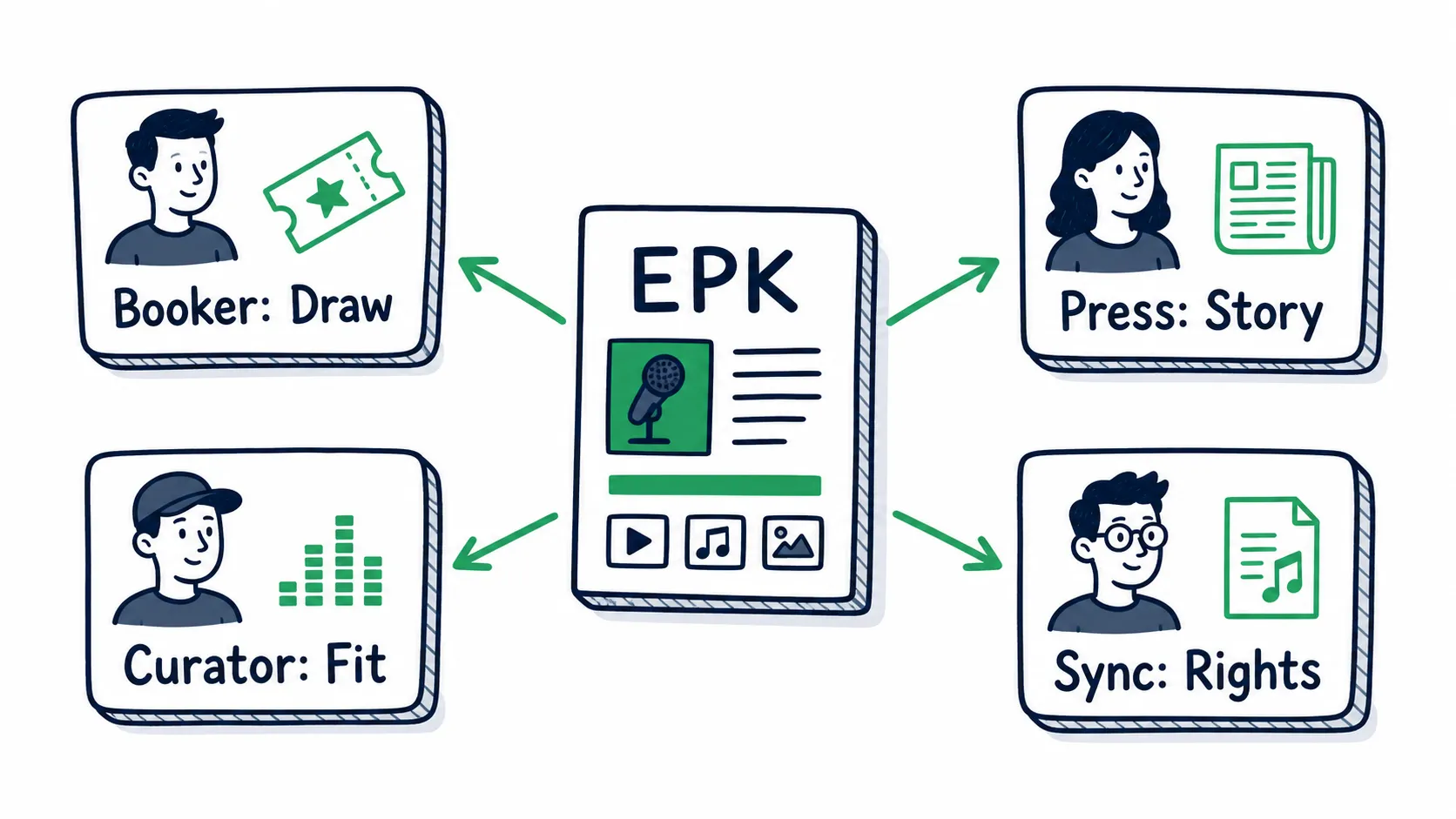
Different readers need different proof first.
Most EPK templates help you make something pretty. They do not help you decide what belongs above the fold.
The Proof Ladder
A serious EPK pushes your strongest proof higher and your weakest proof lower. Use this ladder to rank what you have.
| Level | Proof type | Example | How much it helps |
|---|---|---|---|
| 1 | Artist claim | “We are an exciting live band.” | Weak by itself. |
| 2 | Asset quality | Strong photos, clean live video, polished page. | Shows care, not demand. |
| 3 | Third party signal | Press quote, playlist add, support slot, radio spin. | Useful if the source is relevant. |
| 4 | Behavior | Saves, follows, repeat plays, ticket sales, city demand. | Strong because people acted. |
| 5 | Pattern | Three shows growing in one market, saves rising after each campaign, repeat curator adds. | Best because it shows repeatable demand. |
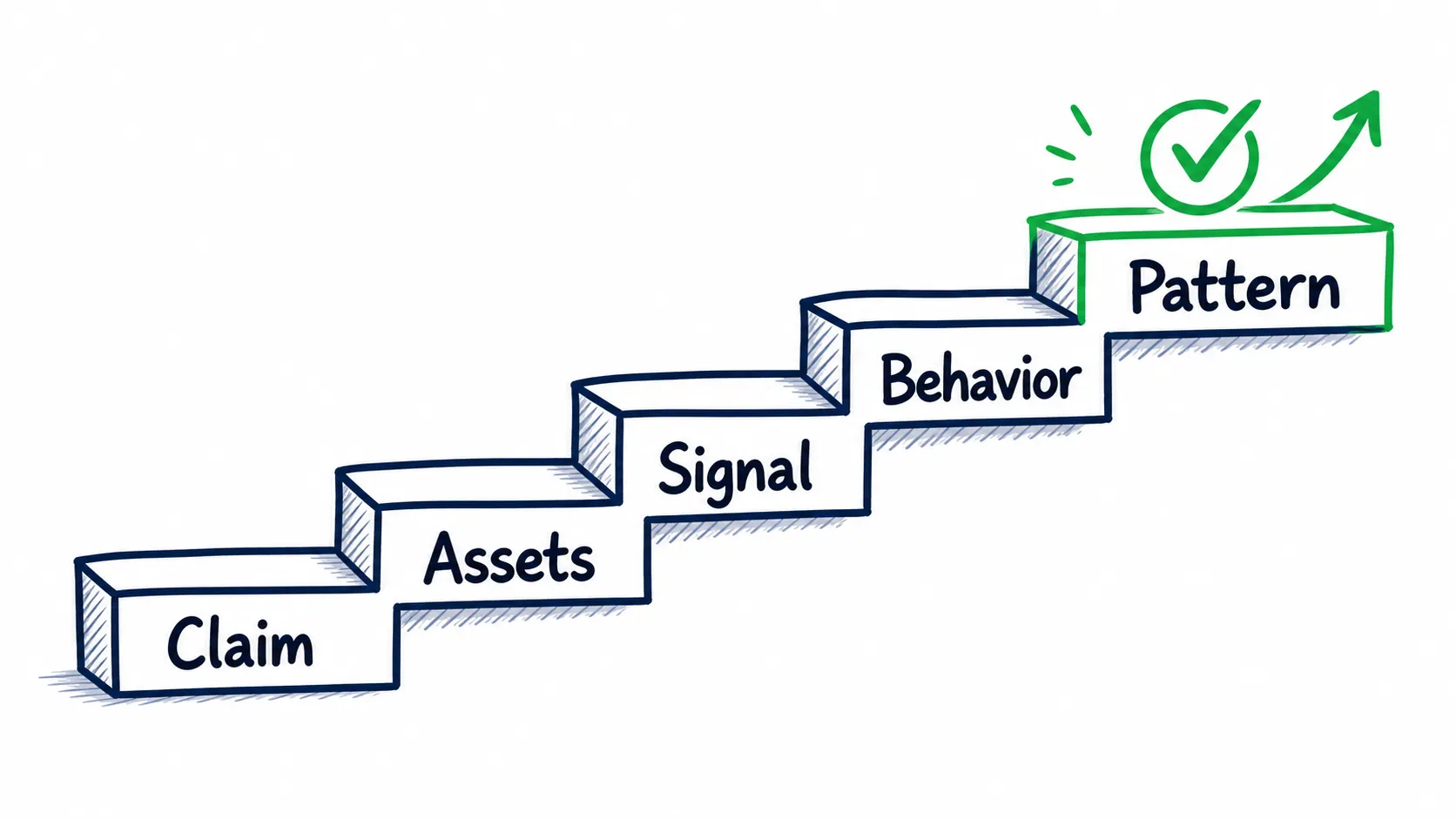
Strong EPKs move from claims to repeatable patterns.
Most artists build EPKs from level 1 and level 2. Serious artists lead with level 4 and level 5 when they have it. You do not need huge numbers for that, only proof that shows a real pattern.
- Weak: “We have 80,000 streams.”
- Better: “Streams grew 38 percent after targeted playlist and content activity, while saves rose on the same track.”
- Strong: “The last three campaigns grew streams, saves, and followers in the same five cities we are booking next.”
That last line gives a booker, manager, or partner something to trust.
The 30 Second Scan Test
Assume nobody reads your EPK at first. They scan it, and you get about 30 seconds before they decide whether to keep going.
Your first screen should answer five questions.
| Question | What to show |
|---|---|
| Who is this? | Artist name, location, sound, current release or campaign. |
| Where do they fit? | Genre lane, audience, live market, playlist mood, press angle. |
| Is there demand? | Ticket proof, listener behavior, press, playlist context, content response. |
| Can I use the assets? | Best song, best video, approved photos, short bio, download link. |
| What do I do next? | Booking, press, management, or direct contact. |
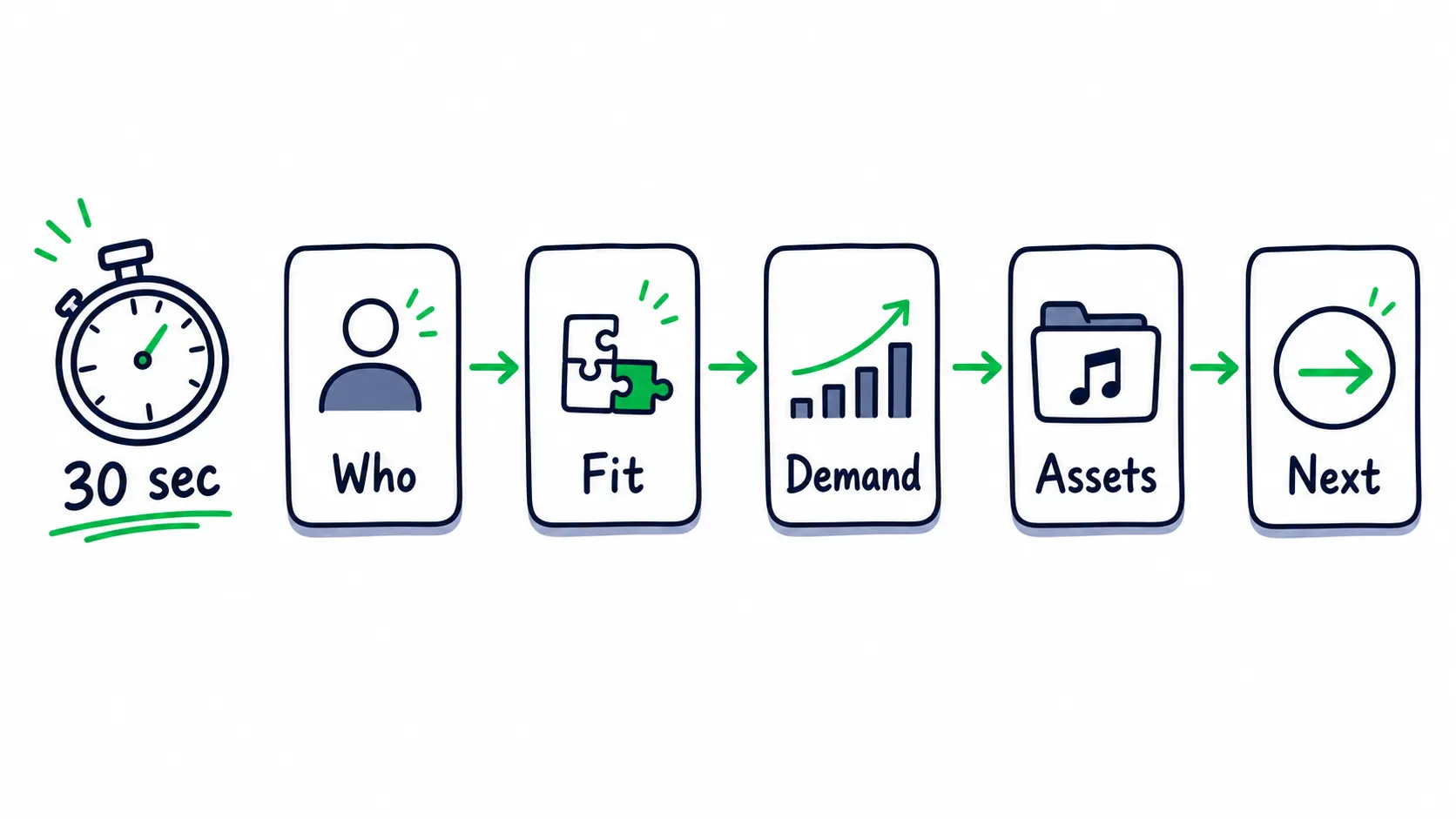
A strong EPK answers the first five questions fast.
Skip the giant photo with no context, the long origin story, and the wall of ten links. Open with the case.
Artist:
Location:
Sounds like:
Now pushing:
Strongest proof:
Best fit:
Contact:
Filled in, it looks like this:
Maya Vale is a Brooklyn alt pop artist making dark, vocal led songs for late night pop and intimate live rooms.

Now pushing: new single campaign and Northeast support slots.

Strongest proof: sold out 150 cap hometown show, 42 percent listener growth over 90 days, and repeat adds from mood based indie pop curators.

Best fit: small theater bills, female led alt pop lineups, grief and reinvention stories, late night pop playlists.
Website EPK, PDF, One Sheet, or Folder?
Use more than one format, but give each one a separate job.
| Format | Real job | What can go wrong | Best use |
|---|---|---|---|
| Website EPK page | Main page for story, proof, music, video, links, and downloads. | It becomes a messy artist website with no clear ask. | Use as the main link. |
| PDF one sheet | Fast summary that can be forwarded. | It goes stale or becomes too large. | Use for bookers, festivals, radio, and older industry contacts. |
| Asset folder | Approved photos, bios, artwork, logos, live clips, tech info. | People land in a folder with no context. | Link after the EPK explains the case. |
| Private pitch page | Custom proof order for one high value target. | Too many versions become hard to keep current. | Use for festivals, labels, sponsors, sync, and strong press targets. |
A clean setup looks like this:
- One main EPK page for the full case.
- One short PDF for forwarding.
- One asset folder for downloads.
- One private version for high value pitches.
Track links when it matters. A private EPK link with simple campaign tags can tell you whether someone clicked through from a pitch and where the traffic went. Google’s Campaign URL Builder is useful for this.
Build the EPK in Proof Blocks
Blocks are easier to update and reuse than full pages. A strong musician EPK usually has these four.
1. Positioning Block
This block tells people where to place you. Use this format:
Artist name is a location based artist making sound description for audience or scene.
Now pushing: release, tour, campaign, festival run, sync push, or press cycle.
Strongest proof: one or two concrete signals.
Best fit: venues, playlists, outlets, brands, or scenes that already fit the artist.
Weak:
Jordan Ray is a genre bending artist with a unique sound and powerful message.Stronger:
Jordan Ray is an Atlanta melodic rap artist making hook driven street records for fans of late night trap, pain rap, and clean vocal melodies.

Now pushing: new single and Southeast club support slots.

Strongest proof: three local support bills over 250 cap, save rate rising on the new single, and strongest listener activity in Atlanta, Charlotte, Tampa, and Houston.
The stronger version gives people a lane, a market, and a reason.
2. Current Campaign Block
Your EPK should show what is moving now. For release planning, connect this with your pre release strategy and music marketing strategy.
Include:
- Current release or booking push.
- Why now matters.
- Best link.
- Best proof.
- Best next step.
Example:
Current campaign: "Cold Room" is the first song in a three single rollout about leaving a dead relationship without turning it into revenge.

Best early response: saves are strongest from late night pop listeners in New York, Los Angeles, Chicago, Toronto, and London.

Ask: press around the release story, playlist fits in sad pop and late night indie, and Northeast support slots.
That gives the reader a usable angle.
3. Demand Block
Most artists get this block wrong by dumping numbers. Interpret them instead.
Spotify explains listener and follower stats and source of streams in its artist support docs. Your EPK should translate that dashboard into a point.
| Metric | Weak use | Strong use |
|---|---|---|
| Monthly listeners | “We have 12,000 monthly listeners.” | “Monthly listeners grew after targeted activity, not one random spike.” |
| Streams | “The song has 80,000 streams.” | “Streams rose while saves and followers also moved.” |
| Top cities | “Our top city is Dallas.” | “Dallas keeps showing up across streams, saves, comments, and ticket interest.” |
| Playlist adds | “We were added to playlists.” | “Mood based curators keep adding the track to late night pop lists.” |
| Press | “We got featured.” | “The quote frames the artist around the same story the campaign is pushing.” |
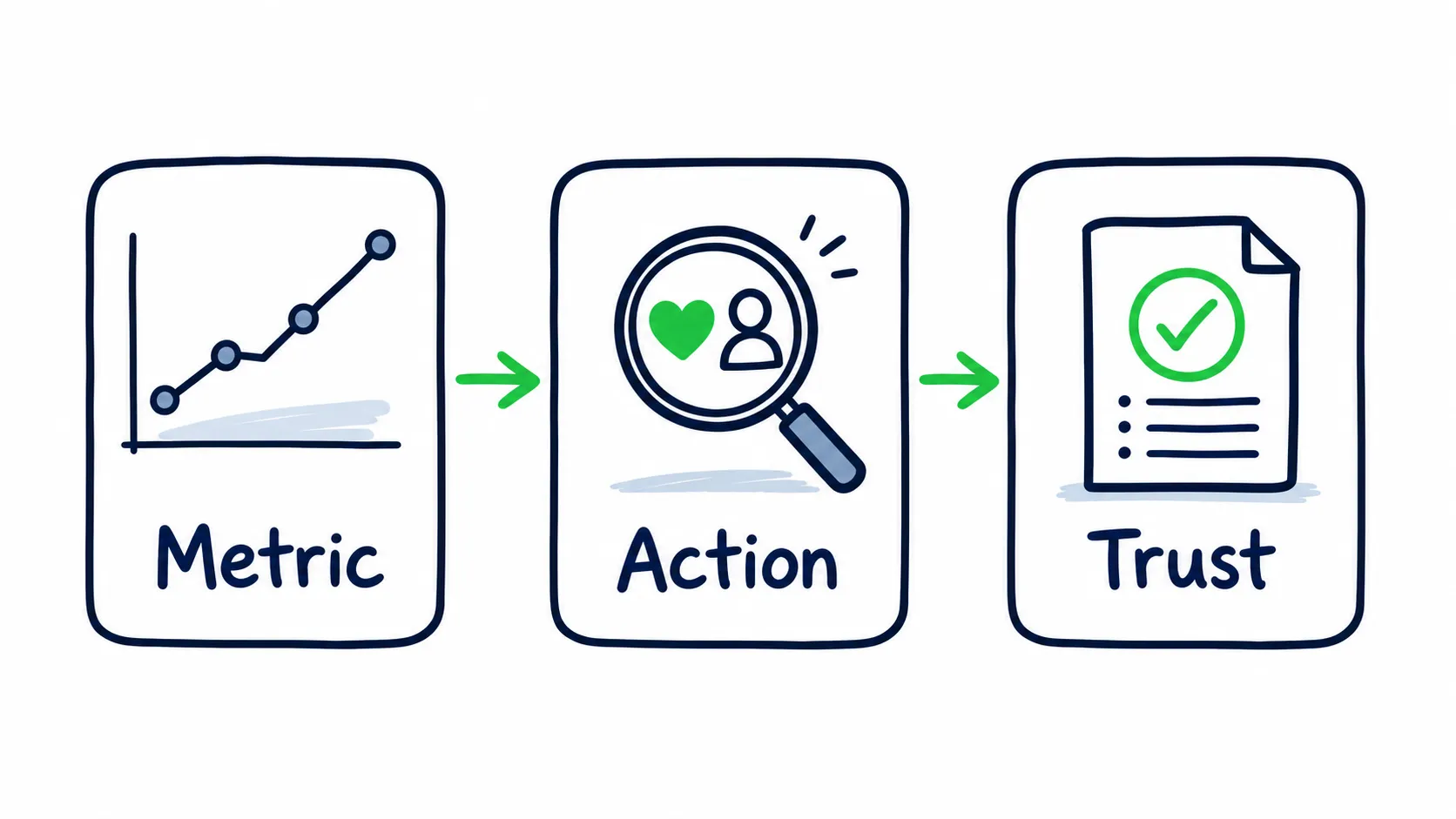
Raw numbers become useful when real actions support them.
If your Spotify data is messy, run a Spotify audit before you put screenshots in an EPK. If the song has clean signs of interest and needs more qualified listeners, pick promotion that shows which cities and listener groups saved and followed in your own Spotify for Artists.
That campaign data is the strongest proof an EPK can carry, because you can open the dashboard and show anyone who asks. It is also how you earn a level 5 line like “grew in the same five cities we are booking next.” Keep the cities and listener groups that responded after each campaign, so the next release starts with people who already saved you and the EPK gets a fresh pattern to lead with.
For deeper context, read Spotify followers or listeners and Spotify monthly listeners.
4. Asset Block
This block makes the reader’s job easy. Include only assets you would be proud to see used without asking you first.
- Best song link.
- Best live clip.
- Best official video or lyric video.
- Three approved press photos.
- Short bio.
- Long bio.
- Current release artwork.
- Download folder.
- Contact by use case.
For YouTube setup and video context, use YouTube for Artists channel optimization and our YouTube monetization for musicians guide.
Key takeaway
Write the Bio Like a Strategist, Not a Poet
Your bio has to do work. It should answer:
- What world does this artist belong to?
- What is the emotional center?
- What is happening now?
- What proof makes the story believable?
- Why should someone care at this moment?
Use three lengths.
| Bio | Use | Job |
|---|---|---|
| 25 words | Email intro, top of EPK, captions. | Place the artist fast. |
| 100 words | Blogs, listings, playlist context, pitches. | Explain sound, story, and current push. |
| 250 words | Press, grants, partner decks, deeper features. | Give the full arc with proof. |
Use this spine:
Artist:
Location:
Sound:
Scene or audience:
Emotional center:
Current campaign:
Proof:
Why now:
Contact or listen:
Do not let AI write the final voice for you. It can sort facts, but it cannot know what your songs cost you.
Weak:
Her unique sound blends multiple genres and creates an unforgettable experience.Stronger:
Her songs turn late night voice notes, gospel trained runs, and quiet panic into alt pop that feels intimate before it gets big.Build Different EPK Versions by Target
Build one main page with a few entry angles instead of ten separate EPKs.
| Target | Lead with | Move lower | Do not send |
|---|---|---|---|
| Venue booker | Live footage, city proof, past bills, draw, support fit. | Deep press bio. | Only streaming stats. |
| Music blog | Story angle, release context, quote, photos, listening link. | Full Spotify data. | Generic “rising artist” copy. |
| Playlist curator | Song mood, genre lane, similar artists, save behavior, clean link. | Long origin story. | An entire album. |
| Festival | Stage fit, live clip, audience proof, lineup match, market story. | Small playlist wins. | A page with no live video. |
| Sync contact | Mood, tempo, lyric themes, instrumental, clearance contact. | Fan growth story. | Rights confusion. |
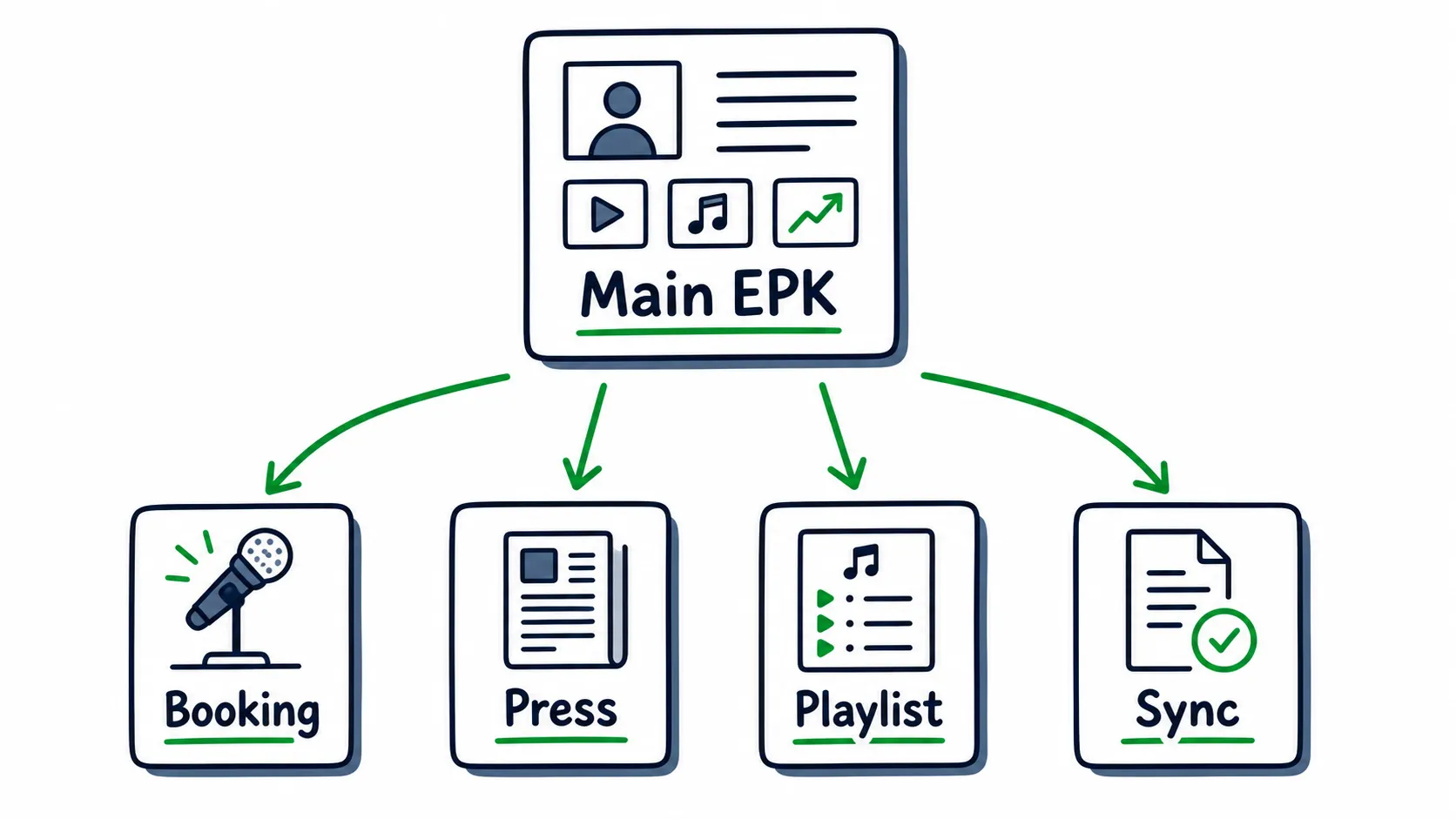
One main EPK can support different entry angles.
What If You Do Not Have Press Yet?
Do not fake press, invent quotes, or add weak logos to fill space. Use stronger proof from other places:
- Live footage where the room reacts.
- Ticket sales or room size.
- City data that matches a booking target.
- Fan comments that use real listener language.
- Playlist adds that match the song mood.
- Save and follow movement after a campaign.
- Repeat support from a curator, venue, or creator.
- A clear story behind the release.
- High quality photos that match the sound.
If playlist discovery is part of the proof plan, start with free playlist submission or use playlist placement to put the song on a playlist whose audience fits. If the release has a real story, music blog promotion should help frame that story rather than hand you a badge to paste into a press section.
Key takeaway
The Advanced EPK Mistakes
These mistakes make an artist with real potential look smaller than they are.
Mistake 1: Showing scale without quality
Big numbers can hurt if they look empty. “100,000 streams” is weak when there are no saves, no follows, no market fit, no press, no live demand, and no story. Show the quality behind the number.
Mistake 2: Using the same proof for every ask
A playlist curator does not care about your merch table first. A venue booker does not care about your save rate first. A writer does not care about your full tech rider first. Lead with the proof that lowers that person’s risk.
Mistake 3: Hiding the best asset
If your live clip is the strongest proof, do not bury it after 11 paragraphs. If your press quote frames the whole story, put it near the top. If one city keeps showing demand, say it early.
Mistake 4: Making the EPK look current but not true
Polish does not create trust. If the numbers are old, the photos do not match the era, the link is dead, or the contact is wrong, the whole page feels shaky.
Mistake 5: Sending a folder with no argument
A folder is storage. The EPK tells people what matters, and the folder gives them the files after they care.
EPK Email Template
Keep the email short. Its only job is to make the right person want to click.
Subject: Artist name, clear fit, strongest proof

Hi name,

I am reaching out because artist name feels like a strong fit for your room, column, playlist, festival, or campaign.

The current push is release, show, tour, or campaign.

Strongest proof: one signal this person cares about.

Listen or watch: link
EPK: link

Would it make sense if I sent dates, a private stream, or a short follow up?

Name
Contact
For a booker, the proof might be room size or city draw. For press, it might be the release story and photo set. For a curator, it might be mood, genre fit, and listener behavior.
Spotify explains how artists can pitch unreleased music to playlist editors. The same lesson applies outside Spotify, because context helps people place the song.
Final EPK Audit
Before you send the page, run this audit.
Above the fold
- Artist name is clear.
- Sound is clear.
- Current push is clear.
- Strongest proof is visible.
- Best next step is obvious.
Proof
- Booking proof shows live demand.
- Press proof shows story.
- Playlist proof shows fit and behavior.
- Partner proof shows audience match.
- Spotify proof explains the pattern, not only the number.
Assets
- Best song is first.
- Best live clip is easy to find.
- Photos are approved.
- Bio has short and long versions.
- File names are clean.
- Downloads work.
Trust
- Links work on phone and desktop.
- Numbers are current.
- Old logos are removed.
- Contact info is correct.
- The page has one clear ask.
FAQ: EPK for Musicians
Should an EPK be a PDF or a website?
Use a website as the main EPK. Use a PDF as the backup.
Your website EPK is easier to update, track, and send. It should hold the full case: music, video, live proof, current campaign, contact, and asset links. Use the PDF when someone needs a short one sheet to forward.
Best setup:
- Website EPK: main pitch, proof, music, video, links, and downloads.
- PDF one sheet: fast summary for bookers, festivals, radio, and partners.
- Asset folder: photos, bios, artwork, and files after the reader understands why they matter.
What should I use to make an EPK?
Use whatever lets you keep the EPK current without rebuilding it every time.
The proof order is the strategy, whatever tool you use. Your setup should let you:
- update links in minutes
- move the strongest proof higher
- embed music and video
- add press photos and downloads
- keep one clean contact path
If updating the EPK feels annoying, it will go stale. A stale EPK makes the artist look inactive.
What should I include if I do not have press yet?
Use proof from behavior. Do not pretend weak press is strong press.
Better substitutes:
- live footage where the room reacts
- ticket sales or past room size
- city data that matches the pitch
- saves, follows, and repeat listening
- fan comments that describe the music in real language
- playlist adds that match the actual song mood
- a clear release story and strong photos
Should I include Spotify numbers in my EPK?
Yes, if they prove something. No, if they are only decoration.
A screenshot of monthly listeners is weak by itself. Turn the number into proof by adding context:
- What changed: saves, follows, repeat plays, source quality, or city demand.
- When it changed: release week, campaign window, show week, playlist add, or content push.
- Why it matters: the number connects to the person you are pitching.
Weak:
We have 18,000 monthly listeners.Stronger:
Monthly listeners grew after the last single, with saves and followers rising in the same five cities we are booking next.What do bookers actually look for in a musician EPK?
Bookers look for fit, draw, and trust.
They are asking:
- Fit: Does this artist make sense for this room, bill, city, and audience?
- Draw: Is there any proof people will show up or care locally?
- Trust: Will this artist be easy to book, promote, and work with?
Lead with live video, city proof, past bills, room size, clean contact info, and a simple booking ask. Do not make a booker infer live demand from streaming numbers alone.