
YouTube Monetization for Musicians: How to Get Paid From Videos, Content ID, and Royalties
YouTube monetization for musicians is confusing because YouTube can pay the same song in a few different ways. Most artists hear “YouTube monetization” and think it means ads on their own channel. That is only one of them.
Your YouTube channel is one business and your music rights are another.The quick map
YouTube money for musicians usually comes from three places:
- Channel money: your own videos earn through YouTube Partner Program ads, Premium, memberships, Supers, and Shopping.
- Recording money: your master recording earns through Content ID when other videos use your music.
- Release money: your distributed track earns YouTube Music royalties through your distributor.
Why this matters
This split explains the weird stuff artists run into:
- Your own video can get claimed by your distributor.
- A small channel can earn before it gets regular ad revenue.
- A sampled song can be legal to release but risky for Content ID.
- A creator can have permission and still get an automated claim.
What this guide answers
Real artist questions, answered without a rights textbook:
- Should I dispute my own distributor’s claim?
- Can I earn before I hit 1,000 subscribers?
- Does Content ID pay more than channel ads?
- Can I use royalty free loops?
- How do I let a creator use my song without them getting claimed?
What You’ll Learn
- How YouTube monetization for musicians works in plain English.
- The difference between YouTube Partner Program, Content ID, and YouTube Music royalties.
- What can pay before your channel gets ad revenue.
- When a copyright claim is normal and when it is a red flag.
- Which songs are risky for Content ID.
- How to build a channel that can reach monetization.
- The setup checklist to follow before you upload your next video.
YouTube Monetization for Musicians Has Three Main Paths
YouTube has three payout paths. You do not need all three on day one, but you do need to know which one you are using.
| Path | What pays you | Best fit | What to watch |
|---|---|---|---|
| YouTube Partner Program | Ads, YouTube Premium, memberships, Supers, Shopping, and fan funding on your own channel. | Artists who post videos, Shorts, live sessions, tutorials, vlogs, or behind the scenes content. | Subscribers, watch hours, Shorts views, policy status, and audience retention. |
| Content ID | Ad revenue from videos that use your recording, even when the video is on someone else’s channel. | Artists who own recordings and want to monetize user generated videos. | Samples, loops, beats, covers, distributor settings, and whitelist rules. |
| YouTube Music royalties | Streaming royalties from YouTube Music and music delivered by your distributor. | Artists who release through a music distributor. | Release metadata, distributor reports, topic channel activity, and Official Artist Channel setup. |
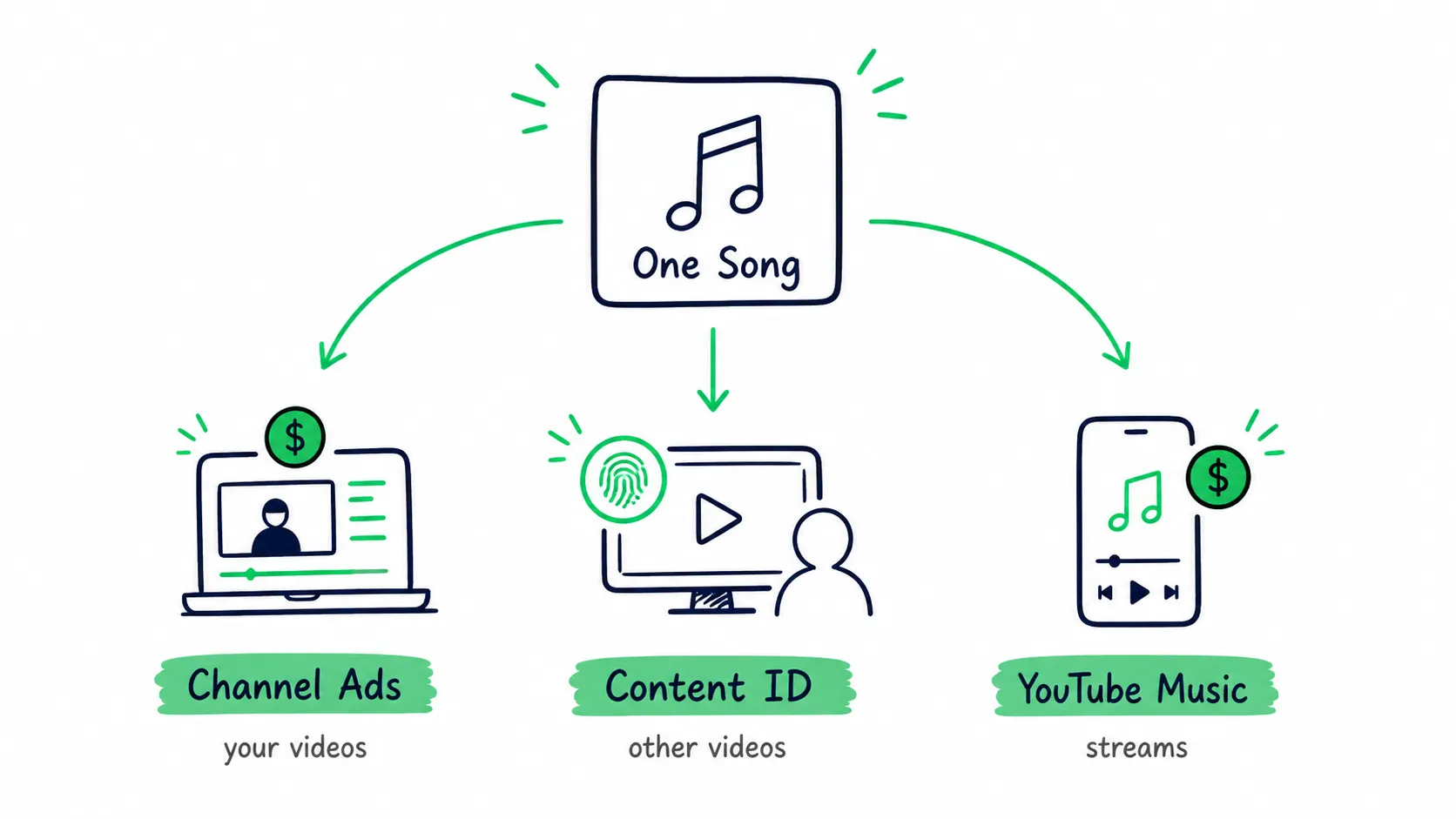
One song can earn through different YouTube paths depending on where the use happens.
For the bigger income map, read make money with your music. For the rights side, read music royalties explained.
YouTube Partner Program for Musicians
The YouTube Partner Program is the channel monetization path. Through it, your own YouTube channel can earn from ads, YouTube Premium, Super Thanks, Super Chat, Super Stickers, memberships, and Shopping.
YouTube has two main access levels.
| Access level | Main requirements | What you get |
|---|---|---|
| Early YPP access | 500 subscribers, 3 public uploads in the last 90 days, plus either 3,000 valid public watch hours in the last 12 months or 3 million valid public Shorts views in the last 90 days. | Fan funding features and select Shopping features, depending on eligibility. |
| Full ad revenue access | 1,000 subscribers, plus either 4,000 valid public watch hours in the last 12 months or 10 million valid public Shorts views in the last 90 days. | Revenue sharing from ads and YouTube Premium, plus more partner tools. |
Check YouTube’s official page before you build a plan around those numbers.
For artists, most of the YPP work is building a channel people watch long enough to qualify. Official audios may get plays but weak watch time. Shorts may get reach but little money. A channel with live clips, lyric videos, music videos, story videos, song breakdowns, and fan content has more ways to grow.
Key takeaway
Content ID Is the Part Most Musicians Need to Understand
Content ID is YouTube’s matching system. It scans uploaded videos for copyrighted material. If your recording is in the system, YouTube can spot it when another channel uses it, and the rights owner can usually track it, block it, or monetize it.
That means your song can earn from a playlist video, fan edit, reaction video, dance video, vlog, gym montage, or short film even if you did not upload that video yourself.
Content ID is also where artists make bad moves. They turn it on for the wrong song, dispute the wrong claim, or accidentally claim a creator they wanted to help.
Content ID and YPP are not the same thing
YPP is about your channel. Content ID is about your recording.
You can be too small for YPP and still earn through Content ID if your eligible recording is enrolled through a distributor or rights partner.
You can also be in YPP and still see your own video claimed because your distributor delivered the same track to Content ID. That claim is not always bad. Sometimes it means your distributor is collecting money for you. The decision is whether you want this video monetized through your channel, or through the Content ID partner that controls the claim.
| What happened | What to do first |
|---|---|
| Your channel is not in YPP yet and your distributor claims your official video. | Do not panic. Confirm the claimant is your partner, then check that the money shows in your distributor reports. |
| Your channel is in YPP and your own video gets claimed. | Ask your distributor about whitelisting your channel or releasing the claim on your own upload. |
| A creator used your track and the claim is valid. | Decide if you want to monetize, whitelist, or license that use. Do not block good exposure by default. |
| A random company claims your song. | Check your distributor, publisher, producer, sample source, and metadata before you dispute. |
YouTube has useful official pages on copyright management tools, qualifying for Content ID, and content eligible for Content ID. Read them before you submit a song that uses loops, samples, covers, or leased beats.
YouTube Music Royalties Are a Different Check
Sending your release to YouTube Music through your distributor works separately from uploading a video to your channel. Your distributor sends the audio and metadata, and YouTube Music can then use that release on YouTube Music, topic channels, and music surfaces.
Those plays usually pay through your distributor, not through your channel’s AdSense setup.
For one song, the three paths pay like this:
- YouTube Music stream: pays through your distributor.
- Official video on your channel: can pay through YPP if your channel is approved.
- Another channel using your track: can pay through Content ID if the recording is eligible and enrolled.
If your YouTube Music money looks weird, do not guess. Pull the distributor report by source and compare it with YouTube Studio. For the full rights map, use music royalties explained.
Can Musicians Make Money Before 1,000 Subscribers?
Yes. You cannot earn normal ad revenue from your own videos yet, but several other sources can pay now.
| Revenue source | Can it work before 1,000 subscribers? | What you need |
|---|---|---|
| YouTube Music royalties | Yes | Your release delivered to YouTube Music through a distributor. |
| Content ID | Yes | An eligible recording registered through a distributor or rights partner. |
| Merch and direct sales | Yes | A clear link in your description, pinned comment, channel links, and video calls to action. |
| Sponsorships | Sometimes | A focused audience that a brand actually wants, even if the audience is small. |
| YPP ad revenue | No | You need full YPP ad revenue eligibility and approval. |
So waiting for 1,000 subscribers is a bad plan. While the channel grows, set up the parts that can work now:
- Get your rights clean.
- Post videos that build watch time.
- Send viewers somewhere useful.
If Spotify is still your main home base, send YouTube viewers there too. Back it with Spotify promotion that moves budget toward listeners who save and follow, playlist placement where you pick the exact playlist before you pay, and results you can check in your own Spotify for Artists profile.
Check Your Rights Before You Turn On Content ID
Content ID claims matches automatically. That helps when you own the recording and hurts when your song includes sounds that other people can use too. Use this table as a quick gut check.
| Track type | Content ID risk | Why it matters |
|---|---|---|
| Fully original recording | Low | You control the master, and there is less chance of false matches. |
| Royalty free loop or sample based track | Medium to high | Other producers may use the same loop, so your claim could hit their song by mistake. |
| Leased beat | High | Other artists may have rights to use the same beat. Your lease may also ban Content ID. |
| Cover song | Mixed | You may own your recording, but you do not own the song itself. |
| Remix, mashup, karaoke track, public concert recording, or commercial instrumental | Very high | You may not have enough rights to monetize or register it. |
YouTube’s monetizable content guide is worth reading here, especially if you post covers.
You can have legal permission to use a loop in your song without having the exclusive right to claim every YouTube video that includes that same loop. A lot of producers get burned here.
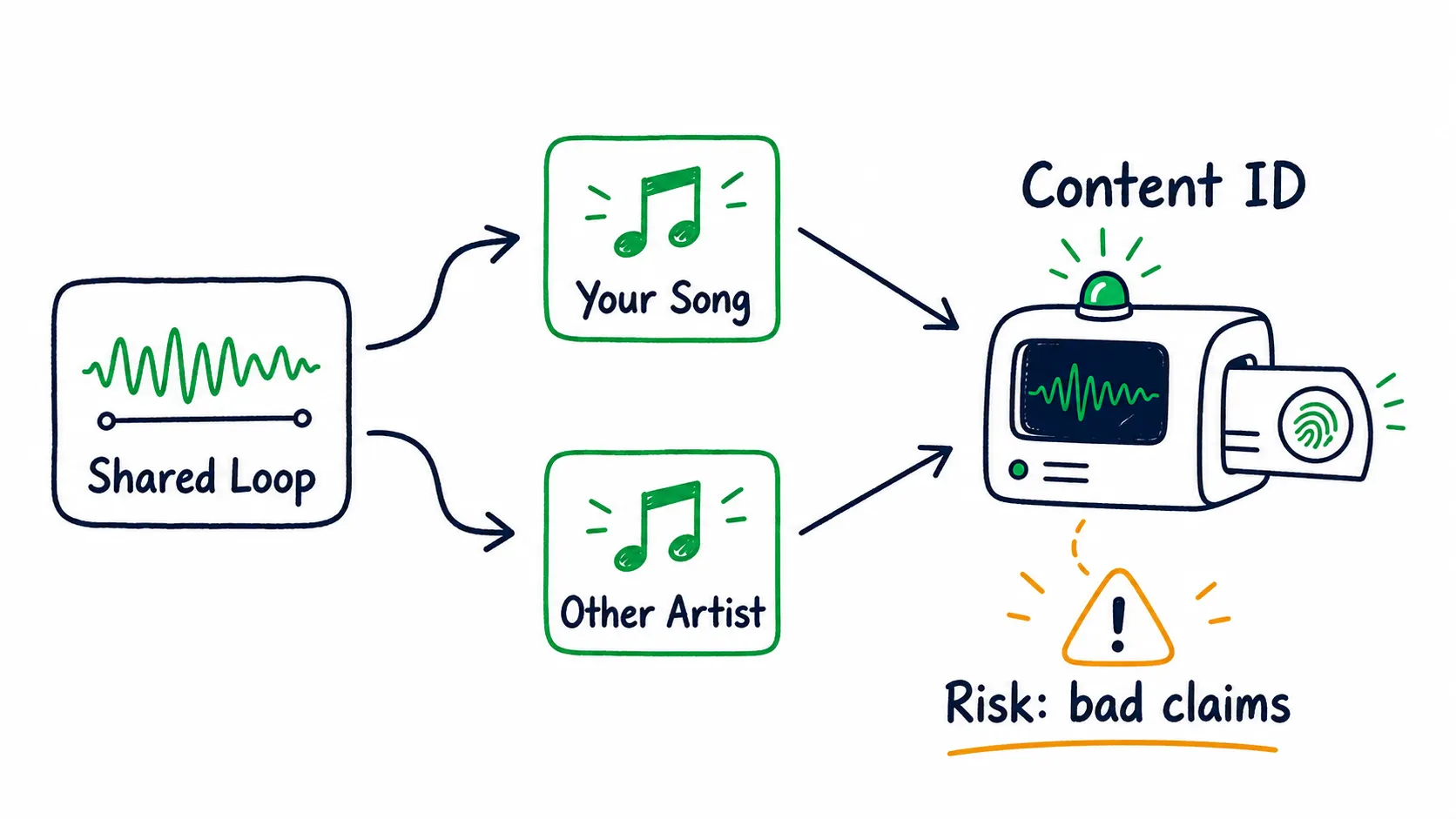
Shared sounds can make Content ID claim music you did not mean to claim.
Build a Channel That Can Actually Get Monetized
A music channel needs videos people click, watch, and come back for. Plan them in four buckets.
1. Your official catalog
This is the music video, lyric video, visualizer, live session, acoustic version, studio version, and album playlist. Every important release should have at least one clean YouTube asset.
Keep titles simple: artist name, song name, version.
2. Search based videos
Search videos help because people are already looking for something. Try:
- “How I made this song”
- “Song breakdown”
- “Vocal chain breakdown”
- “Guitar tone breakdown”
- “Writing the hook”
- “What the lyrics mean”
These videos work well for producers, songwriters, singers, guitarists, and any artist with a real story behind the release.
3. Fan connection videos
These videos separate you from every other upload channel. Post release diaries, setlist stories, studio clips, live Q and A, gear talk, and honest breakdowns of what worked and what flopped.
If the whole release plan still feels messy, use our music marketing strategy guide before you start filming.
4. Shorts that point somewhere
YouTube Shorts monetization can help, but Shorts should not be the whole plan. Use them to test hooks, find angles, grow subscribers, and send people to the full song or full video.
If you are already making short form content, pair this with TikTok for musicians so one idea can feed both platforms.
The Viewer Fit Rule
A random viewer can move the counter and still do nothing for your channel.
A matched viewer watches music like yours, lives in a useful country, and searches for similar songs, artists, moods, or genres.That kind of viewer can watch longer, subscribe, comment, stream the song, or come back later.
Artists get burned when they buy views first and ask about fans later. Flip the order and start with one question: “Who should see this video, and why would they care?”
| Traffic type | What it tells you | Better standard |
|---|---|---|
| Cheap view packages | The number jumped, but you may not know where the views came from. | Avoid anything that hides the source. |
| Broad social boosts | Some people clicked, but many may not be fans of your lane. | Use social to warm up people who already know you. |
| Official YouTube ad traffic | Real viewers saw the video inside YouTube, and the results show in YouTube Analytics. | Target by keyword, country, genre, similar channels, and viewer intent. |
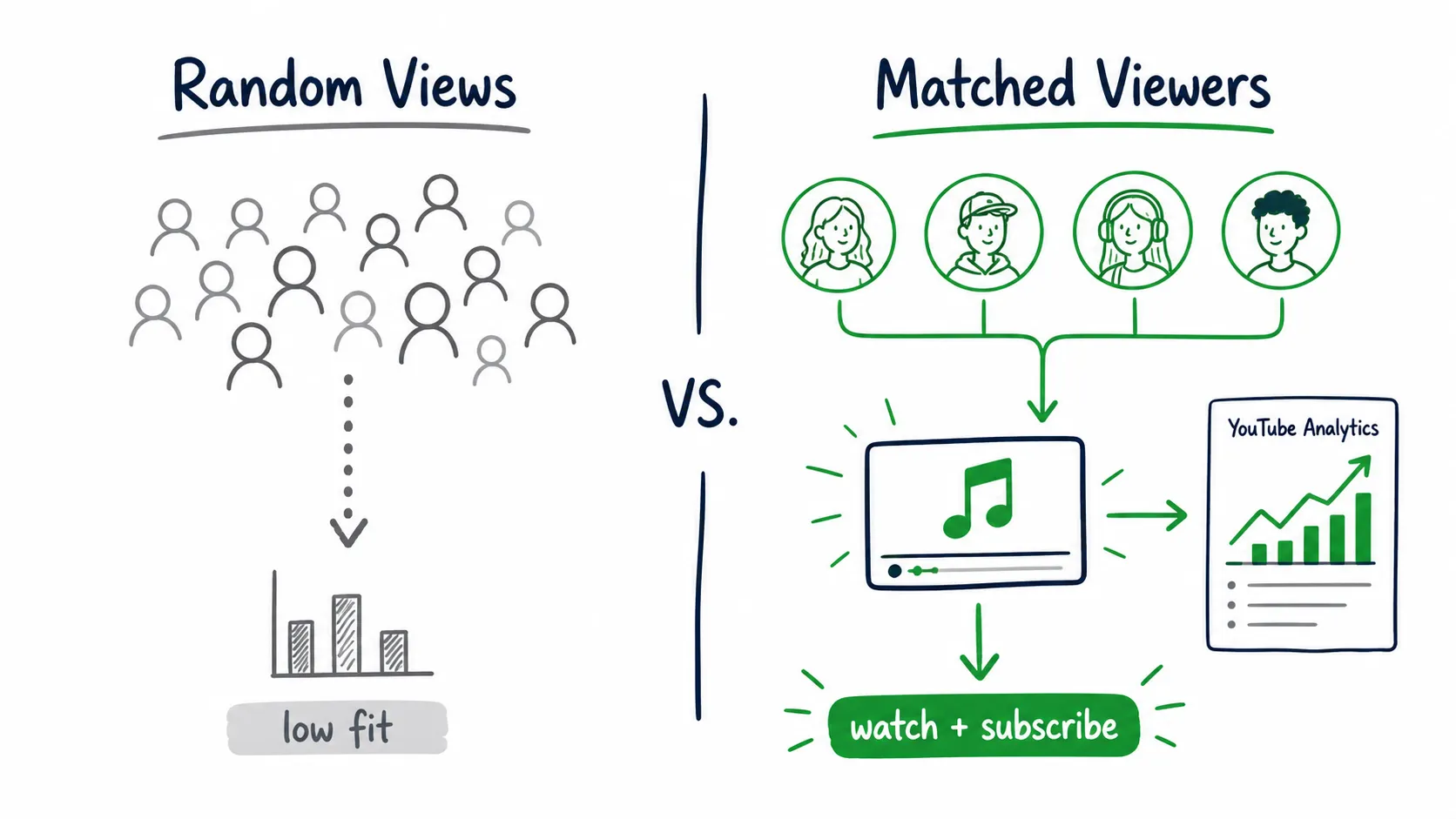
A smaller matched audience can teach you more than a larger random audience.
Good promotion should be easy to verify. You should know where viewers came from, what audience was targeted, and what happened after the click.
YouTube Analytics should show watch time, retention, geography, subscribers, comments, likes, and drop off. There should be no mystery traffic, no fake accounts, and no vanity spike you cannot explain.
A clean YouTube Ads based process gives you audience testing. A commodity “buy views” offer gives you a number on a screen.
Before you pay anyone to promote a music video, ask five questions:
- Will the traffic come from official YouTube Ads or some hidden network?
- Can I verify the views inside my own YouTube Analytics?
- What audience will be targeted by keyword, country, genre, or similar channels?
- Are the views royalty eligible and safe for a monetized video?
- Are you promising likes, comments, or subscribers that real viewers have to choose for themselves?
The strongest answers describe a campaign that runs as real YouTube Ads through Google Ads, reaches viewers matched to your sound, and shifts targeting toward viewers who watch, subscribe, and come back. The views stay royalty eligible, and every result shows in your own YouTube Analytics.
Key takeaway
The Setup Plan
Do this before you chase views.
- Claim or clean up your artist channel.
- Check whether you qualify for an Official Artist Channel.
- Confirm your distributor is sending releases to YouTube Music.
- Make a list of songs that are safe for Content ID.
- Leave risky songs out of Content ID until the rights are clear.
- Ask your distributor how whitelisting works for your own channel.
- Upload a clean official video, lyric video, or visualizer for each priority song.
- Build playlists by release, live session, Shorts, and behind the scenes content.
- Add one clear next step in every description and pinned comment.
- Publish one search based video for each release.
- Use Shorts to point people to the full song or full video.
- Review YouTube Studio once a week.
Once that base is in place, growth comes from getting the right people to watch and stay.
The Biggest Mistakes Musicians Make
Most YouTube mistakes are small setup errors that quietly cost money.
| Mistake | Why it hurts | Better move |
|---|---|---|
| Disputing every claim on your own video | Some claims are your distributor collecting for you. | Confirm who claimed it and where the money flows first. |
| Putting leased beats into Content ID | You may claim other artists who licensed the same beat. | Read the lease and opt out if exclusive Content ID rights are not clear. |
| Only uploading official audios | It limits watch time, personality, and fan connection. | Add live clips, stories, search videos, and behind the scenes content. |
| Chasing cheap views | Bad audience fit can lead to low retention and weak channel signals. | Promote to listeners who match the sound. |
| Ignoring the pinned comment | You waste attention that could become streams, emails, sales, or tickets. | Give viewers one simple next step under every video. |
YouTube also checks channels against its channel monetization policies. Thin, reused, repetitive, or low effort content can make monetization harder. Your channel should look like it belongs to a real artist with real music, real context, and a real audience.
How to Let a Creator Use Your Song Without a Claim
This one comes up all the time: a YouTube creator wants to use your song, you are fine with it, but you do not want them to get claimed.
A permission note helps prove the agreement, but it does not stop automated Content ID by itself. If Content ID is active, you usually need a whitelist or exemption through the company managing your claims. Ask your distributor if they can whitelist a whole channel or only one video.
If you still want a simple permission note, keep it tight.
I, [legal name], confirm that I control the master recording for [song title] by [artist name].

I give [creator name or channel name] permission to use this recording in [video title or channel use description] on YouTube.

This permission is non exclusive and does not transfer ownership.

Any use outside this permission needs separate written approval.

Signed:
Date:
Contact:
Use a real license for brand deals, paid campaigns, sync use, exclusive use, or anything with serious money attached.
FAQ
Should I monetize my own music video through YPP or let my distributor claim it with Content ID?
First, find out who claimed it and where the money will show up.Then use this rule:
- Not in YPP yet: the distributor claim may be the only way that video earns ad money.
- Already in YPP: ask your distributor about whitelisting your channel.
- Unknown claimant: do not dispute yet. Check your distributor, publisher, producer, sample source, and metadata first.
A claim from your own rights partner may be normal, so do not dispute blindly.
Can I make money on YouTube before I have 1,000 subscribers?
Yes. Separate channel ads from other income. Before full YPP ad revenue, these can still work:
- YouTube Music royalties
- Content ID
- Merch links
- Fan offers
- Sponsors, if your audience is focused enough
Regular ads on your own videos need full YPP ad revenue access.
Why did my own song get a copyright claim on my own channel?
Usually, your distributor or rights partner registered your recording with Content ID. YouTube found the audio in your upload and applied that partner’s policy.
Check in this order:
- Is the claimant your distributor or rights partner?
- Is the song enrolled in Content ID?
- Is your channel whitelisted?
- Did the track use a sample, loop, beat, cover, or shared asset?
Can I use royalty free samples or leased beats and still register the song for Content ID?
Sometimes, but be careful. These are two separate tests:
- Allowed to release: you have permission to use the sound in your song.
- Safe for Content ID: you have enough exclusive rights to claim matches across YouTube.
If other creators can use the same loop, beat, or sample, Content ID can create bad claims.
Read the license and ask your distributor before enabling Content ID on anything shared, leased, sampled, or non exclusive.How do I let another YouTube channel use my music without getting claimed?
The answer depends on whether Content ID is active.
- Content ID is off: nothing may trigger.
- Content ID is on: a permission note alone may not stop the automated claim.
- Best move: ask your distributor or Content ID partner to whitelist the creator’s channel or video.
Still keep written permission. It helps both sides prove what was allowed, even if it does not stop the automated claim by itself.